Leave Your Message
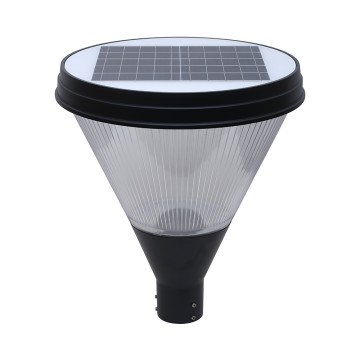
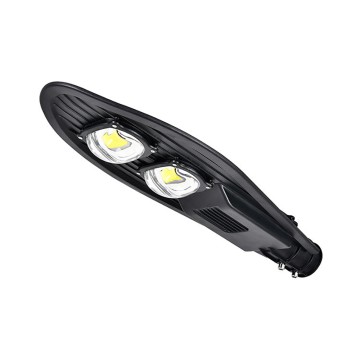
In the rapidly evolving landscape of urban development, the concept of the "Smart City" has transitioned from a futuristic vision to an immediate global imperative. At the very core of this transformation is the Solar Powered LED Street Light For Smart City And IoT Infrastructure Lighting. Historically viewed merely as a tool for nocturnal illumination, the modern street light has undergone a radical technological metamorphosis. Today, these towering structures serve as the central nervous system of urban environments. By integrating high-efficiency photovoltaic panels with ultra-bright, low-energy LED arrays, municipalities are achieving unprecedented energy independence while simultaneously laying the physical groundwork for the Internet of Things (IoT).
The strategic placement of street lights—spaced evenly along every road, highway, and pedestrian path—makes them the perfect real estate for IoT deployment. Unlike traditional grid-tied lighting, solar-powered variants offer immunity to grid failures, ensuring continuous operation of critical data-gathering sensors even during natural disasters or rolling blackouts. These intelligent nodes are now equipped with environmental sensors, high-definition surveillance cameras, 5G micro-base stations, and edge computing modules. This convergence of renewable energy and digital infrastructure is completely redefining how city administrators monitor traffic flow, measure air quality, enhance public safety, and manage municipal energy budgets.
The commercial and industrial landscape for solar-powered LED street lights is experiencing exponential growth, driven by a confluence of stringent environmental regulations, plummeting costs of solar technology, and the insatiable demand for data-driven urban management. From a financial perspective, the Return on Investment (ROI) paradigm has shifted dramatically. While the initial Capital Expenditure (CapEx) for smart solar lighting can be higher than traditional sodium-vapor or basic LED fixtures, the Operational Expenditure (OpEx) is virtually eliminated. There are no monthly electricity bills, no costly trenching for underground wiring, and significantly reduced maintenance costs due to the long lifespan of LED components and advanced lithium iron phosphate (LiFePO4) batteries.
Furthermore, the industrial sector is leveraging these smart poles as revenue-generating assets. Telecommunication companies are leasing space on these poles to deploy 5G and 6G antennas, bypassing the bureaucratic hurdles and massive costs associated with building dedicated cell towers. Similarly, data collected by the IoT sensors—ranging from hyper-local weather patterns to vehicular movement analytics—is becoming a highly valuable commodity for urban planners, retail developers, and autonomous vehicle manufacturers. Governments worldwide, particularly in Europe, North America, and rapidly urbanizing regions in Asia-Pacific, are heavily subsidizing these installations as part of their carbon-neutrality pledges and digital transformation agendas. The solar-powered LED street light is no longer just a hardware purchase; it is a strategic investment in a city's digital and environmental future.
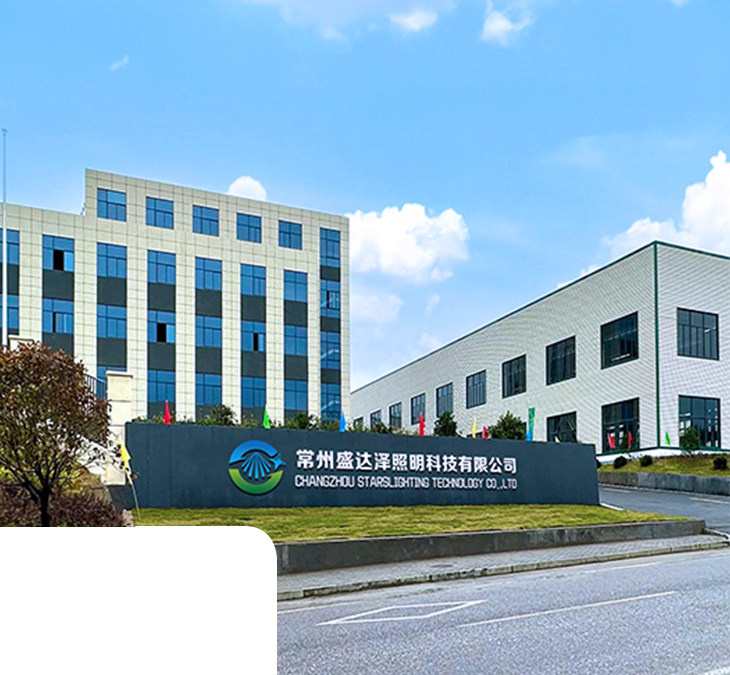
Changzhou Starslighting Technology Co., Ltd. was established in 2016 and is located in Hengshanqiao Town, Wujin District, Changzhou City, Jiangsu Province. The factory currently has 80 employees, building space about 3800 square meters, and its annual production capacity is up to 200,000 sets.

Products are built with waterproof, dustproof, and corrosion-resistant materials (e.g., IP65/IP67 ratings), ensuring reliable long-term performance in harsh outdoor environments.

Products are certified with CE, CB, RoHS, ERP, ISO, etc, and other globally recognized standards, facilitating smooth market entry and enhancing customer confidence.
The trajectory of Solar Powered LED Street Light For Smart City And IoT Infrastructure Lighting is being shaped by several cutting-edge technological trends. Chief among these is the integration of Edge Computing and Artificial Intelligence (AI). Instead of sending vast amounts of raw data (such as continuous video feeds) back to a centralized cloud server, modern smart poles process this data locally at the "edge." AI algorithms embedded within the light pole can instantly identify traffic accidents, detect anomalous crowd behaviors, or recognize license plates, sending only critical alerts to central command. This drastically reduces bandwidth requirements and latency, enabling real-time emergency responses.
Another major trend is Predictive Maintenance via Machine Learning. Traditional street lights are typically repaired only after they fail and are reported by citizens. In contrast, IoT-enabled solar lights continuously monitor their own health metrics—battery degradation, solar panel efficiency, LED temperature, and voltage fluctuations. By analyzing these data points, the system can predict a component failure weeks before it happens, automatically dispatching a maintenance crew with the exact replacement part. This proactive approach minimizes downtime and optimizes labor deployment.
Furthermore, we are witnessing the rise of V2X (Vehicle-to-Everything) Communication. As autonomous driving technology matures, vehicles require constant communication with their surrounding infrastructure to navigate safely. Smart solar street lights, equipped with Dedicated Short-Range Communications (DSRC) or C-V2X technology, act as beacons that feed real-time data to self-driving cars regarding traffic signal phases, pedestrian movements in blind spots, and upcoming road hazards, cementing their role as critical safety infrastructure.
🌍The versatility of these systems allows for highly specialized applications across various sectors of the smart city ecosystem. Let us dissect some of the most impactful scenarios:
1. Smart Highways and Remote Roadways: In remote areas where extending the electrical grid is financially prohibitive, solar-powered IoT street lights are a game-changer. Beyond providing essential illumination, these poles monitor road surface temperatures (detecting black ice), track wildlife crossings to warn approaching drivers, and serve as emergency Wi-Fi hotspots or SOS communication relays for stranded motorists.
2. Industrial Parks and Logistics Hubs: Large-scale industrial facilities operate 24/7 and require robust security and logistical tracking. Here, the smart lighting infrastructure is integrated with RFID and Bluetooth Low Energy (BLE) scanners. As freight trucks or assets move through the facility, the light poles track their location in real-time. Simultaneously, adaptive lighting technology dims the LEDs when areas are vacant and ramps up to 100% brightness instantly when movement is detected, maximizing energy savings without compromising safety.
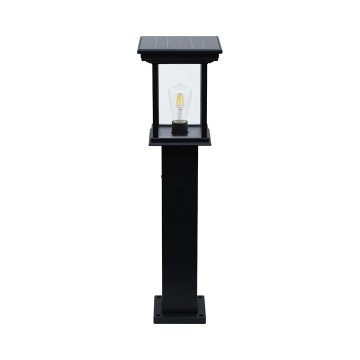
3. Urban Eco-Zones and Smart Courtyards: In residential areas and public parks, the focus shifts to environmental monitoring and public well-being. IoT sensors attached to the solar lights continuously measure PM2.5 levels, humidity, temperature, and noise pollution. This data is often displayed on digital screens attached to the poles or made available via public smartphone apps, empowering citizens to make informed decisions about their outdoor activities while providing city planners with granular data to tackle micro-climate pollution.