Leave Your Message
Engineered for high luminous efficacy, adaptive wireless dimming, and rugged meteorological endurance across diverse metropolitan environments.
Modern municipalities and industrial megaprojects are undergoing a structural paradigm shift in urban utility planning. The traditional reliance on grid-tied street lighting is rapidly yielding to distributed, autonomous, zero-emission outdoor solar street lamps. Once viewed simply as off-grid luminaires for remote highways, today's solar lighting systems serve as foundational edge-computing nodes within comprehensive Smart City and IoT Infrastructure Lighting architectures.
As cities race toward net-zero decarbonization mandates, the integration of high-efficiency Monocrystalline silicon modules, high-capacity Lithium Iron Phosphate (LiFePO4) energy storage, and smart Maximum Power Point Tracking (MPPT) micro-controllers eliminates costly ground trenching, underground high-voltage conduit cabling, and grid transformer installations. This transition slashes initial capital civil engineering expenses by up to 60% while insulating public lighting assets from regional brownouts and grid volatility.
Every IoT-enabled solar lighting pole operates as an independent microgrid, ensuring 100% operational uptime during grid collapses, severe weather anomalies, and seismic emergencies.
The global demand for intelligent solar luminaires is propelled by stringent ESG governance and municipal fiscal optimization. Legacy street lamps consume approximately 30% to 40% of a city's total electrical budget. By retrofitting with smart LED luminaires paired with precision optical beam distribution (Type II, Type III Batwing lenses) and autonomous time/radar dimming profiles, energy consumption is curtailed by over 75%.
Furthermore, when integrated with long-range IoT telecommunication protocols—such as LoRaWAN, NB-IoT, Zigbee, and cellular 4G/5G CAT-M1—each luminaire streams real-time operational telemetry to a centralized software-as-a-service (SaaS) Cloud Central Management System (CMS). Municipal fleet operators can remotely monitor battery state-of-charge (SOC), photovoltaic panel degradation, ambient temperature, and luminaire lumen health, eliminating routine manual truck rolls and reducing municipal operational maintenance costs by upwards of 50%.
Dissecting the hardware, firmware, communication stack, and cloud layers that transform an outdoor solar fixture into an intelligent urban data hub.
Equipped with millimeter-wave microwave radar, passive infrared (PIR) sensors, and dynamic ambient light detectors (LDR). Luminaires dynamically alter lumen output from 20% background standby to 100% full illumination upon vehicular or pedestrian approach, maximizing optical safety while conserving battery reserve.
Utilizing bidirectional LoRaWAN gateways or direct NB-IoT telecommunications. Street poles form self-healing, low-latency RF mesh networks capable of transmitting encrypted performance packets up to 15 km without requiring high-bandwidth cellular subscriptions on every single node.
Micro-controlled MPPT charge regulators achieve 99% conversion efficiency with multi-stage algorithm charging. Built-in BMS safeguards against over-charge, over-discharge, deep cold temperature cutoff (-30°C to +70°C), extending the lifecycle of automotive-grade LiFePO4 cells to 3,000+ deep cycles.
Web-based GIS mapping and interactive dashboards display asset health, automate scheduling routines, generate automated fault alarms (e.g., LED driver malfunction, panel shading, battery degradation), and optimize citywide lighting based on astronomical sunrise/sunset calculations.
Precision die-cast ADC12 aluminum housing with anti-corrosion electro-deposition coating. Engineered with advanced silicone sealing gaskets, hydrophobic breather valves, and 4G vibration-resistant brackets that withstand tropical typhoon forces up to 60 m/s.
Firmware incorporates machine learning algorithms that evaluate rolling 72-hour weather forecasting data. The system automatically shifts power budgets during prolonged monsoon or overcast conditions, guaranteeing 365 nights of zero-blackout illumination.

Changzhou Starslighting Technology Co., Ltd. was established in 2016 and is located in Hengshanqiao Town, Wujin District, Changzhou City, Jiangsu Province. The factory currently has 80 employees, building space about 3800 square meters, and its annual production capacity is up to 200,000 sets.

Products are built with waterproof, dustproof, and corrosion-resistant materials (e.g., IP65/IP67 ratings), ensuring reliable long-term performance in harsh outdoor environments.

Products are certified with CE, CB, RoHS, ERP, ISO, etc., and other globally recognized standards, facilitating smooth market entry and enhancing customer confidence.
Tailored optical photometry and intelligent energy scheduling configured for diverse urban, commercial, and utility environments.
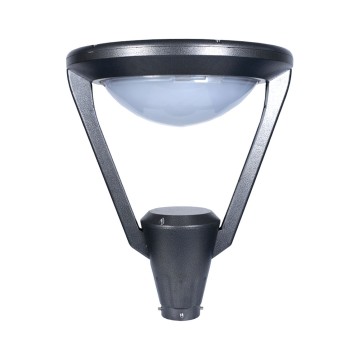
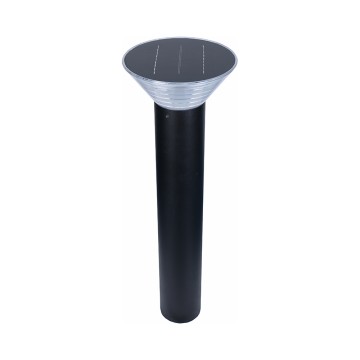
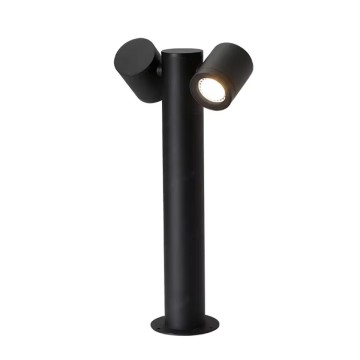
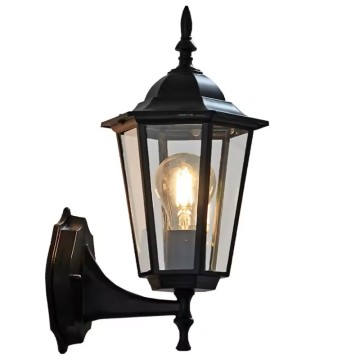
Architectural landscape bollards and pathway fixtures with low-glare diffuse optics, PIR human presence sensors, and aesthetic aluminum housings for public squares and villas.
High-flux portal transition and underpass lighting equipped with constant lumen output (CLO) control, anti-corrosion finishes, and rapid-response optical stabilization.
High-mast solar floodlighting arrays featuring narrow-beam asymmetrical distribution lenses, low Unified Glare Rating (UGR), and high color rendering index (CRI > 80).
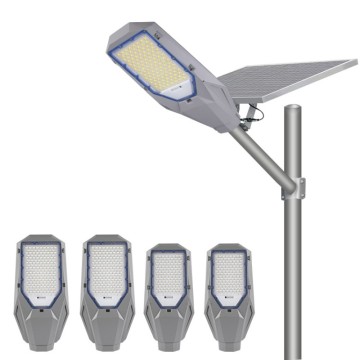
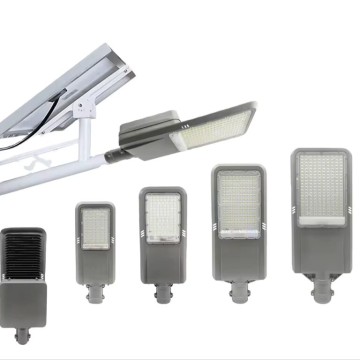
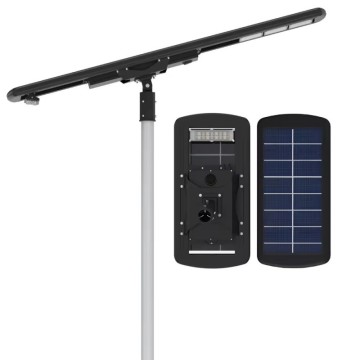
High-power all-in-one and separate type solar streetlamps delivering uniform EN13201 Class M1-M4 road illumination, dynamic vehicle tracking, and autonomous LoRaWAN control.
Robust IP66 perimeter security lighting, automated shift-schedule dimming profiles, logistics yard flood illumination, and zero-grid-dependency fail-safe operation.
Comprehensive OEM/ODM turnkey production, worldwide logistics, and engineering lifecycle partnerships.

Offers end-to-end customization—from product design and light-source specifications to smart control systems—tailored to clients' specific project requirements and application scenarios, supporting OEM/ODM services and ensuring timely, reliable global delivery.

Maintains a worldwide after-sales service network with local teams providing rapid response, technical guidance, and spare parts replacement.

Equipped with an agile R&D and manufacturing system, enabling quick sample production and efficient mass delivery to help clients seize market opportunities.

Goes beyond product supply by offering continuous support—including lighting solution design, installation advice, and system upgrades—to foster long-term client relationships.
How next-generation edge intelligence and multi-functional smart pole technologies will reshape urban connectivity over the coming decade.
The solar street pole of tomorrow is evolving from a single-purpose lighting asset into an integrated urban utility carrier. With the expansion of 5G micro base stations, electric vehicle (EV) charging micro-plugs, environmental air quality monitoring (PM2.5, CO2, humidity), and public emergency call systems, smart solar poles act as the physical backbone for municipal edge computing without drawing auxiliary power from overburdened municipal grids.
As autonomous driving ecosystems mature, roadside solar luminaires equipped with integrated LiDAR, optical video telematics, and C-V2X transceivers will provide real-time road hazard detection, traffic congestion analytics, and dynamic luminance intensification during adverse road events, ensuring hyper-synchronized vehicular safety.
By connecting solar telemetry feeds directly with urban BIM and GIS Digital Twin software platforms, municipal asset managers can simulate solar irradiance patterns across urban canyons and forecast clean kilowatt-hour generation. Furthermore, validated clean-energy output metrics are cryptographically verified to generate municipal carbon credit offsets, turning public lighting infrastructures into revenue-positive carbon assets.
Emerging bifacial solar panels capture reflected albedo light from roads and sidewalks, boosting energy harvesting yields by 15-25% in snowbound and high-reflectance asphalt environments.
Rigorous international compliance guaranteeing product safety, electrical stability, and environmental sustainability.





Explore our full line of all-in-one solar streetlamps, split-type high-power luminaires, and architectural landscape systems.