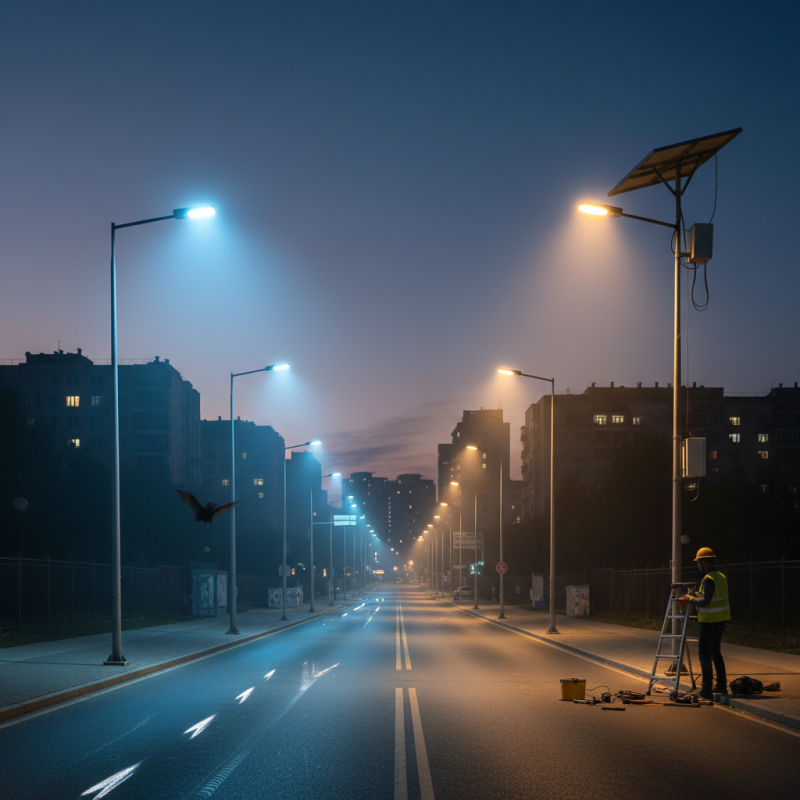
Lately, it feels like everyone’s been talking about how LED street lights have become super popular. Sure, they’re great when it comes to saving energy, but it’s not all smooth sailing. There are some issues popping up that cities need to keep an eye on. If you’re curious about “What’s Really Wrong With LED Street Lights,” you’re not alone — it’s something many places around the world are trying to figure out. According to a 2022 report from the International Energy Agency, more than 40% of cities have switched over to LED tech. But even so, a lot of local governments are running into surprises they didn’t see coming.
Dr. Jane Thompson, who specializes in urban lighting, mentions, “The rapid spread of LED street lights has kind of outpaced our understanding of their long-term effects.” People are worried about things like light pollution, flickering issues, and whether the color stays consistent. A lot of LEDs emit this harsh blue light, which isn’t just tough on our eyes — it can also mess with nighttime visibility and disturb wildlife. Funny enough, this concern often gets overshadowed when cities push forward with solutions like the Led Light Solar Street Light.
On top of that, installation and maintenance are pretty daunting tasks. Many cities simply don’t have the right infrastructure in place to support these fancy new systems properly. There are reports showing that poor installation can end up costing cities a pretty penny in repairs later on. Thinking about all these challenges really makes you wonder: how do we strike the right balance between playing with new technology and making sure it actually works well in real life? It’s definitely a conversation worth having about how we bring innovation into public lighting without causing more headaches down the road.
Overview of CE Certification in Electrical Products
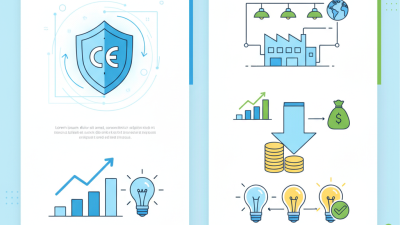
CE certification is a mark of compliance for electrical products including LED street lights. It indicates that a product meets European safety, health, and environmental standards. Obtaining CE certification for products like Led Flood Street Light is essential for market access in Europe. However, the process can be complex and may pose several challenges.
One common issue is the understanding of technical documentation required for certification. Manufacturers often struggle with this. Inadequate information can lead to delays in the approval process. Testing and compliance ensure that products perform safely in real-world conditions. Misunderstanding these requirements can hurt a company’s reputation.
Another consideration is the evolving nature of regulations. Changes can occur frequently. This requires manufacturers to stay updated, which can be a daunting task. Many overlook the importance of comprehensive testing before applying for CE certification. Each oversight can lead to costly setbacks. Thus, precise documentation and thorough testing are crucial for successful certification and customer satisfaction.
Understanding ODM (Original Design Manufacturer) in LED Lighting
The role of an ODM in the LED lighting sector is crucial. An Original Design Manufacturer creates products that meet specific requirements set by companies. In the context of LED street lights, ODMs play a vital role in designing energy-efficient solutions. They ensure that technology aligns with regulatory standards.
According to industry reports, the global LED street lighting market is projected to grow significantly. Bloomberg projects it may reach $25 billion by 2027. However, not all ODMs meet quality standards. This inconsistency can lead to performance issues, ultimately affecting urban infrastructure.
Tips: Always check for compliance certifications. This ensures safety and performance. Consider the product’s lifespan and warranty. It’s essential to evaluate these factors before making a decision.
While many ODMs provide innovative designs, challenges remain. Not all designs are suitable for various climates. Some Led Street Lamps may not perform well in extreme conditions. This can raise questions about long-term reliability. Users should investigate the ODM’s track record in similar environments.
Common Regulatory Standards for LED Street Lights
LED street lights are becoming increasingly popular due to their energy efficiency. However, ensuring compliance with regulatory standards is crucial. Common standards include the International Electrotechnical Commission (IEC) and the European Committee for Electrotechnical Standardization (CENELEC). These organizations provide guidelines to ensure safety and performance.
A report by the American Society of Civil Engineers highlights that improperly designed LED street lights can lead to suboptimal brightness and color temperature. For instance, lights that mimic the warmer light of Metal Halide Street Lights may be necessary for visibility in certain urban environments. This is an area where many manufacturers lack clarity. Companies need to invest in proper testing and certification to meet these standards.
Moreover, issues like glare and light pollution must also be considered. Some LED models produce harsh lighting that can disrupt local wildlife and human habitation. Regulatory bodies are increasingly focused on these factors, urging developers to adopt measures that mitigate these effects. It's important for the industry to reflect on these practices and make the necessary improvements.
CE Certification ODM and Problems with LED Street Lights Explained - Common Regulatory Standards for LED Street Lights
| Dimension |
Value |
| Input Voltage |
AC 100-240V |
| Power Consumption |
150 Watts |
| Luminous Flux |
18,000 Lumens |
| Color Temperature |
5000K (Neutral White) |
| IP Rating |
IP65 |
| Life Span |
50,000 hours |
| Certifications |
CE, RoHS, FCC |
| Dimming Feature |
Yes |
| Warranty Period |
5 years |
Challenges in CE Certification for LED Street Lights
CE certification is a mandatory requirement for LED street lights sold in Europe. This certification ensures that these products meet essential safety and performance standards. However, the certification process is not without challenges. Many manufacturers face difficulties during testing phases. Often, components do not meet required specifications. This can lead to significant delays and increased costs.
Another issue is the varying interpretations of CE standards. Not all testing labs interpret regulations the same way. This inconsistency can result in products being rejected. Manufacturers may find themselves scrambling to rectify issues raised during evaluation. Feedback from testing can sometimes be vague, leaving teams puzzled. This creates frustration and hinders timely completion of projects.
The complexity of documentation poses additional hurdles. Complete and accurate records are essential. However, many manufacturers overlook this step. Missing documents can lead to non-compliance. This can be a costly oversight in terms of time and resources. Furthermore, language barriers can complicate communication with certification bodies. Overall, while CE certification is crucial, it's a process requiring careful navigation.
Challenges in CE Certification for LED Street Lights
The chart above illustrates the various challenges faced in achieving CE certification for LED street lights. Each dimension represents a specific challenge rating from 1 to 10, highlighting the complexity and demands of compliance in this industry.
Key Problems Faced by ODMs in LED Street Light Production
The LED street light market has seen rapid growth. According to a recent market analysis, the global LED street lights segment is expected to reach USD 10 billion by 2025. However, Original Design Manufacturers (ODMs) face significant hurdles in production. One key issue is the inconsistency of components. Reports show that nearly 30% of ODMs struggle to source high-quality parts due to fluctuating supply chains.
Another challenge is meeting CE certification requirements. Many ODMs lack adequate testing facilities. Consequently, the compliance rate is often below 80%. This leads to costly delays and increases the risk of product recalls. Furthermore, ODMs often have difficulty scaling production to meet demands without compromising quality. Industry data indicates that 45% of manufacturers reported issues with production consistency in 2022.
Quality assurance remains a critical concern. Common defects in LED fixtures can result in reduced lifespan and efficiency. This reality highlights the need for stricter quality control measures. Customer dissatisfaction can emerge from these flaws, impacting business reputation. The continuous cycle of production challenges and compliance hurdles means that ODMs must prioritize innovation and strategic partnerships for better outcomes.
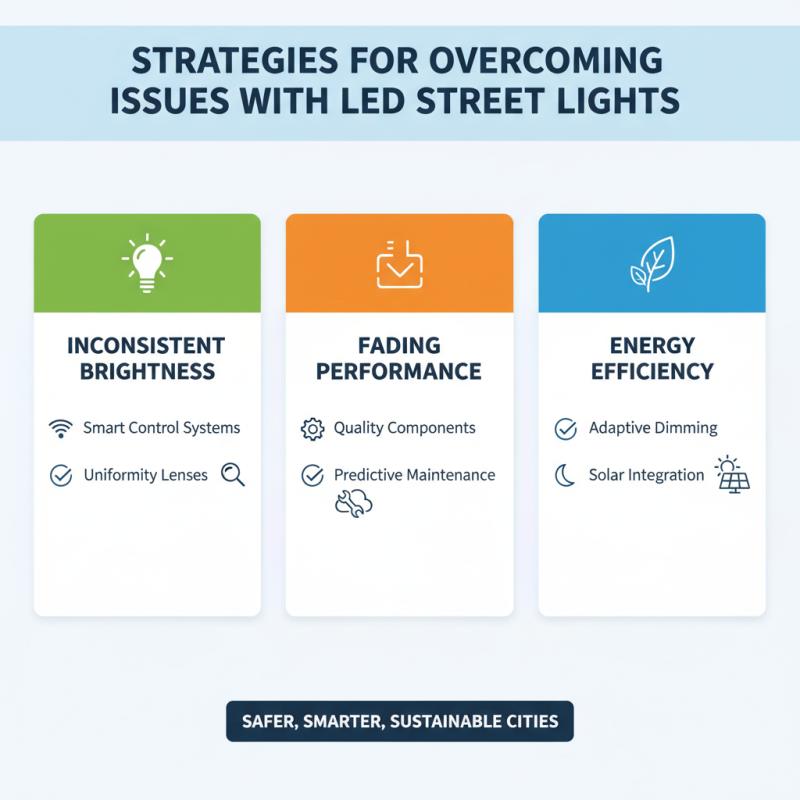
Strategies for Overcoming Issues with LED Street Lights
The increasing adoption of LED street lights has been met with challenges. Many municipalities face issues such as inconsistent brightness and fading performance. These problems can reduce safety on the streets. Moreover, energy efficiency might not always meet expectations, leaving cities to rethink their strategies.
Implementing Solar Street Lights Outdoor can be a viable solution to these ongoing issues. Solar technology harnesses sunlight and minimizes reliance on traditional power sources. This approach can enhance reliability and performance, especially in remote areas where electricity supply is erratic. However, the initial costs might deter some projects.
Regular maintenance is crucial. Some LED models require prompt replacement of parts to sustain their functionality. Additionally, public feedback is essential. It helps in making informed decisions for future installations. Reflecting on these challenges and solutions can lead to better urban planning. Embracing innovative lighting solutions is key to evolving city landscapes.
Future Trends and Developments in LED Street Lighting Technology
LED street lighting is undergoing rapid advancements. According to a report from Allied Market Research, the global LED street lighting market was valued at $5.47 billion in 2020 and is projected to reach $27.9 billion by 2030. This growth highlights the increasing reliance on energy-efficient solutions. However, we face challenges with their deployment.
Despite their benefits, many municipalities struggle with installation issues. Poor design and compatibility with existing infrastructures can lead to significant operational setbacks. A survey by the American Lighting Association revealed that 40% of cities experienced delays due to these integration problems. Moreover, color temperature variation can affect the overall uniformity of lighting, leading to safety concerns.
Innovation is at the heart of future trends in this sector. Smart lighting solutions are emerging, focusing on interconnected systems. These systems can adjust based on real-time data, enhancing energy savings. A McKinsey report states that smart street lighting can reduce energy consumption by up to 50%. Yet, questions remain about data privacy and implementation costs. The industry must navigate these hurdles for sustainable growth.
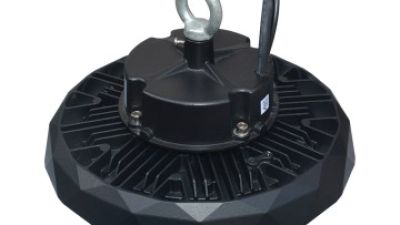
Maximize Efficiency and Flexibility with Dimmable Remote-Controlled LED UFO High Bay Lights: A Comprehensive Guide
Dimmable remote-controlled LED UFO high bay lights are revolutionizing the way we illuminate vast spaces. With wattage options ranging from 100W to 240W and a broad input voltage range of AC100V to 277V, these lights provide unmatched versatility for various applications. Their impressive lumen efficiency, between 140 to 200 lm/W, ensures that they deliver bright, high-quality illumination while consuming minimal energy, making them an eco-friendly choice for businesses and industrial settings.
The construction of these high bay lights features die-casting aluminum and a PC lens, ensuring durability and longevity. Additionally, they come with diverse driver styles including DOB, linear, non-isolated, and isolated options, allowing for further customization according to specific needs. The professional glare-free lens provides options for different beam angles like 60°, 90°, 120°, T2, T3, and T4, ensuring that light is dispersed evenly while minimizing discomfort. Moreover, the dimmable functionality allows users to adjust the color temperature and power output, creating the perfect ambiance for any activity. With an IP65 rating and a five-year warranty, these lights are built to withstand the rigors of industrial environments while providing users with maximum efficiency and flexibility.
FAQS
: CE certification indicates compliance with European safety, health, and environmental standards for electrical products.
It ensures market access in Europe and builds trust with consumers by meeting compliance standards.
Understanding technical documentation and requirements can be complex and often leads to delays in approval.
Compliance with standards ensures safety and performance, essential for gaining consumer trust and market access.
They can lead to poor brightness and color temperature, impacting visibility and urban safety.
Harsh lighting can disrupt wildlife and human life, prompting regulatory bodies to enforce mitigation measures.
The market is expected to grow from $5.47 billion in 2020 to $27.9 billion by 2030, reflecting increased demand.
Poor design and infrastructure compatibility can cause significant delays in implementation and overall effectiveness.
The emergence of smart lighting systems that adjust based on real-time data to enhance energy efficiency.
Data privacy issues and high implementation costs may hinder their widespread adoption and development.
Conclusion
The article titled "CE Certification ODM and Problems with LED Street Lights Explained" delves into the complexities surrounding the CE certification process for LED street lighting. It provides an overview of CE certification requirements for electrical products and highlights the role of Original Design Manufacturers (ODMs) in the LED lighting sector. One key focus is identifying common regulatory standards that guide the manufacturing process and the challenges ODMs face in ensuring compliance with these standards.
A significant question raised is, "What Is The Problem With LED Street Lights?" The article addresses issues such as the difficulties in achieving CE certification, which can lead to increased production costs and delays. Furthermore, it discusses the critical problems ODMs encounter, including quality control and technological advancements. To navigate these challenges, the piece suggests strategies like enhanced collaboration with regulatory bodies and investing in research and development to keep pace with future trends and innovations in LED street lighting technology.