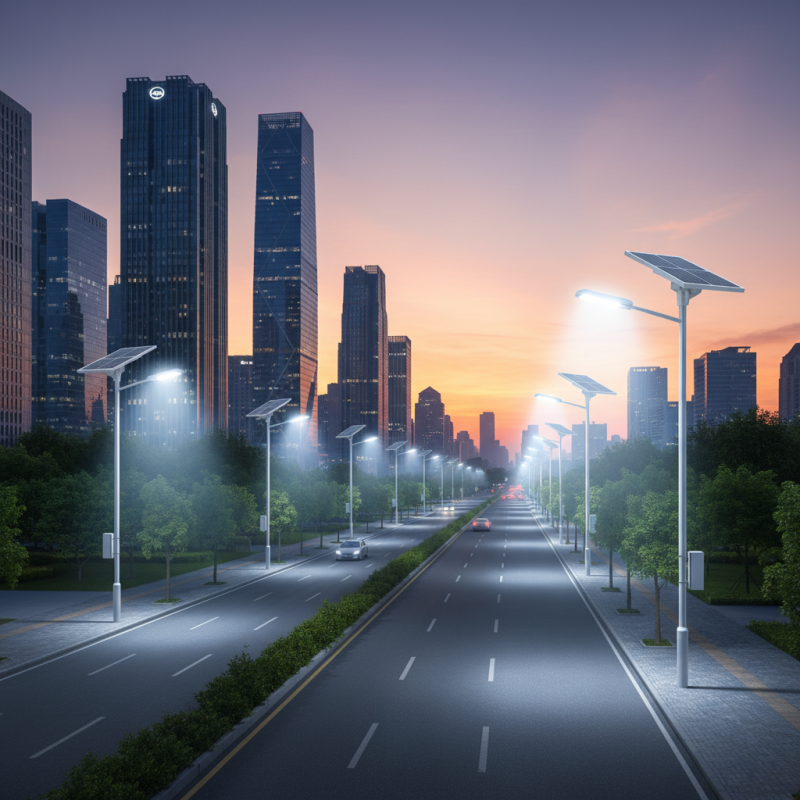
Have you noticed how solar LED street lights are really changing the game when it comes to city lighting? They use the sun's energy to keep our streets lit reliably — pretty cool, right? So, what exactly is a solar LED street light? Think of it as a modern, eco-friendly solution that’s all about efficiency and sustainability rolled into one.
These lights come with quite a few perks. For starters, they cut down a ton on energy use, which means city budgets can breathe a little easier. Plus, they don’t need as much maintenance, thanks to the long-lasting LEDs — definitely a smart choice for local governments trying to get the most out of their investments.
Of course, it’s not all perfect. Some spots might have trouble, especially where sunlight isn’t that great or during overcast days and winter months. That’s something cities need to keep in mind when planning these setups. But honestly? If you plan carefully, the benefits really outweigh the little hurdles. All in all, solar LED street lights are a pretty exciting step toward creating smarter, greener cities.
Top 10 Benefits of Solar LED Street Lights: An Overview
Solar LED street lights are transforming urban landscapes. They harness sunlight, converting it into energy. According to recent data from the U.S. Department of Energy, solar streetlights can reduce energy costs by up to 75%. This means significant savings for municipalities. Using renewable energy sources also cuts greenhouse gas emissions. Cities are moving towards a sustainable future.
Installation of solar LED street lights is often simpler. They require no extensive wiring or grid connection. This reduces installation costs and time. However, some challenges remain. The efficiency of these lights can be affected by geographical location and weather conditions. In areas with less sunlight, the performance might not meet expectations.
Moreover, the lifespan of LED technology is impressive, typically reaching 50,000 hours. Reports show that replacing traditional bulbs with solar LED street lights can result in minimal maintenance. Yet, there can be issues with battery longevity and replacement cost. It’s essential to analyze the full lifecycle. Municipalities need to weigh initial investments against long-term benefits. Overall, the future of Street Light Solar Light illuminates many potential paths.
Energy Efficiency: Utilizing Solar Power for Sustainable Lighting
Solar LED street lights are becoming popular for urban lighting needs. They harness solar energy during the day. This renewable resource powers the lights at night, reducing electricity costs significantly. Many cities are shifting to this technology. The combination of solar panels and LED bulbs makes for highly efficient energy use.
The initial investment can be high. However, in the long run, the savings are substantial. Solar lights encourage sustainability and reduce carbon footprints. Cities benefit from lower operational costs, yet some areas face challenges with sunlight availability. In regions where overcast weather prevails, reliance on solar can become tricky.
Technological advancements are essential to address these concerns.
Batteries used in these systems vary in quality. Some may not last as long as expected. Regular maintenance is crucial to ensure functionality. If neglected, energy efficiency can decline over time. Adapting to the local environment is key for optimal performance, but not all designs meet these demands. Exploring solutions to these challenges can lead to better outcomes in urban planning.
Cost Savings: Reduction in Electricity Bills and Maintenance Expenses
Solar LED street lights are a smart choice for cities. They use solar energy, which reduces reliance on traditional electricity sources. This shift leads to significant savings on electricity bills. Local governments can allocate those funds to community projects instead.
Maintenance expenses also decrease with solar street lights. Traditional street lamps require frequent bulb replacements and repairs. In contrast, Street Lamp Solar Lights have longer lifespans and require minimal upkeep. This change is not just cost-effective; it also frees up resources for more pressing needs.
While the initial investment may seem high, the long-term savings are worth considering. Some places still struggle to adapt to this technology. It raises questions about budgeting for the transition. Addressing these challenges will help cities embrace a sustainable future.
Environmental Impact: Decreasing Carbon Footprint with Renewable Energy
Solar LED street lights are more than just a source of illumination. They play a crucial role in reducing our carbon footprint. By harnessing renewable energy from sunlight, they eliminate the need for fossil fuels. This transition is vital as urban areas continue to grow. Cities have a high demand for energy, and traditional street lights often rely on non-renewable sources.
The environmental impact is significant. Each solar street light installed means fewer greenhouse gas emissions. A small town could save tons of CO2 annually. However, some areas may still struggle with the initial installation costs. Financing options and incentives could help overcome this barrier. Additionally, there can be concerns about weather dependency. In regions with limited sunlight, the effectiveness might diminish. Finding balance is essential for maximizing benefits.
Social acceptance also plays a role in the transition. Communities need to understand solar technology. Education and outreach programs can bridge this gap. There can be skepticism regarding performance and longevity. Yet, many installations prove to be efficient. Proper maintenance and care will ensure these lights last for years. Emphasizing sustainability must go alongside practical considerations to create a positive change.
Enhanced Visibility: High-Quality Illumination with LED Technology
LED technology has revolutionized outdoor lighting, and one of its key applications is in solar LED street lights. These lights offer significant enhancements in visibility due to their high-quality illumination. According to industry reports, LED street lights can provide illumination levels of up to 150 lumens per watt. This efficiency leads to brighter streets and safer environments. Communities using these lights report a noticeable reduction in accidents and crime rates.
Solar Light Street Lamps harness renewable energy from the sun. This means they operate even in remote areas without grid access. A study highlighted that areas with solar LED lights saw an improvement in nighttime visibility by 70%. Improved visibility can help pedestrians feel safer and more secure. However, not all locations receive equal sunlight. Installation must consider local weather and seasonal changes to maximize efficiency.
While the benefits are clear, there are challenges too. The initial installation costs can be high, and the technology requires ongoing maintenance. Over time, LED lights may dim and need replacements, affecting their performance. The overall sustainability of solar light street lamps relies on proper planning and community engagement. Ensuring these lights remain effective is crucial for ensuring public safety and fostering trust in renewable technologies.
Top 10 Benefits of Solar LED Street Lights Explained
| Benefit |
Description |
Impact |
| Enhanced Visibility |
High-quality illumination improves safety and security during nighttime. |
Reduces accidents and deters crime. |
| Energy Efficiency |
LED technology consumes less power than traditional lighting. |
Lower energy costs for municipalities. |
| Environmental Impact |
Utilizes renewable energy, reducing carbon footprint. |
Promotes sustainability and conservation efforts. |
| Low Maintenance |
Long lifespan of LED lights minimizes replacement frequency. |
Reduces maintenance costs and labor. |
| Quick Installation |
Solar street lights are easier and faster to install than traditional lights. |
Less disruption to traffic and surrounding areas. |
| Flexible Deployment |
Can be installed in remote areas without grid access. |
Improves infrastructure in underserved areas. |
| Customizable Design |
Available in various designs to fit local needs and aesthetics. |
Enhances community appeal and user satisfaction. |
| Long-Term Savings |
Significant reduction in utility costs over time. |
Increases fiscal responsibility for local governments. |
| Improved Safety |
Proper illumination encourages safe practices in public spaces. |
Promotes healthier and happier communities. |
| Smart Technology Integration |
Compatible with smart city technologies for enhanced control. |
Optimizes energy usage and monitoring capabilities. |
Easy Installation: Minimal Infrastructure Required for Setup
Solar LED street lights are gaining popularity due to their easy installation process. Unlike traditional street lights, they require minimal infrastructure. These systems often come equipped with solar panels, batteries, and LED fixtures in one unit. According to a report from the International Energy Agency, these lights can be installed without extensive excavations or electrical grid connections. This cuts down on labor and time, making projects more attractive to municipalities.
Reports indicate that installation times for solar LED street lights can be reduced by up to 70%. This efficiency allows for quicker deployment in urban or remote areas. A study from the Solar Energy Industries Association points out that cities can achieve near-zero operational costs after initial installation. However, some installations may still need additional groundwork, such as ensuring the site has adequate sunlight during peak hours. Designing sites with variable conditions can be challenging.
While the benefits are clear, these installations are not without flaws. Not all solar LED street lights perform equally in varying weather conditions. Some models may not provide adequate lighting during cloudy days or longer winters. It is crucial for cities to evaluate the specific needs of their environments. Balancing upfront costs with long-term savings adds another layer of complexity to these projects.
Top 10 Benefits of Solar LED Street Lights
This chart illustrates the primary benefits of Solar LED Street Lights, focusing on aspects such as Easy Installation, Cost Savings, Environmental Impact, Energy Efficiency, and Low Maintenance.
Durability and Longevity: Lifespan of Solar LED Lights Compared to Traditional Options
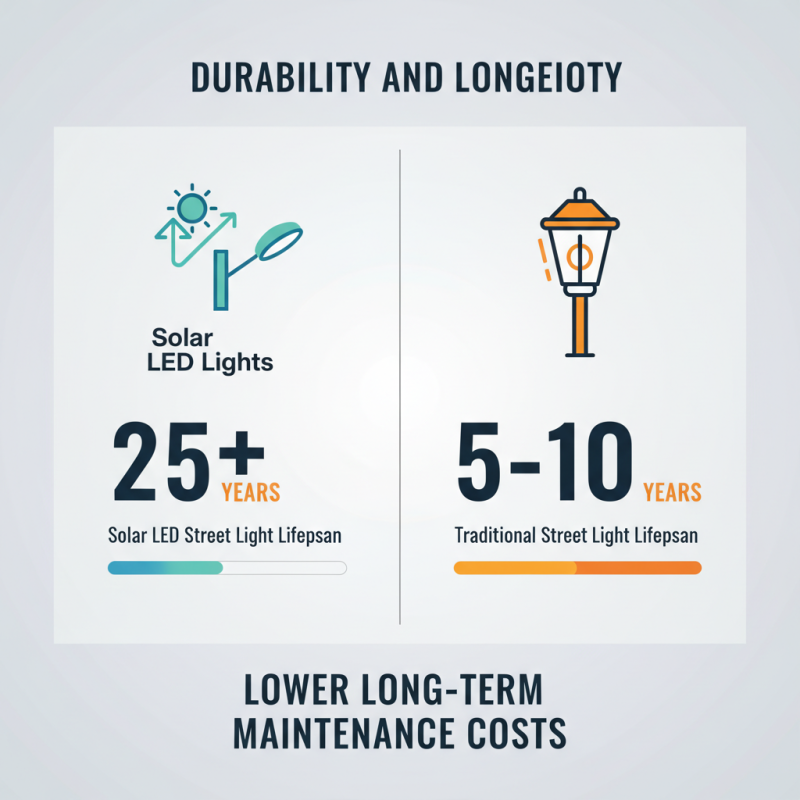
Solar LED street lights are gaining popularity for their durability and longevity. These lights often last longer than traditional options, reducing the need for frequent replacements. A typical Solar Powered Street Light can have a lifespan of more than 25 years. In contrast, conventional street lights usually last around 5-10 years. This significant difference can lead to lower long-term maintenance costs.
The design of solar LED lights also contributes to their durability. They are built to withstand harsh weather conditions. Rain, snow, and extreme temperatures have less impact on their performance. However, they still might face challenges in certain environments. For example, prolonged exposure to excessive dust or humidity can affect their efficiency. Regular maintenance can help mitigate these issues.
Moreover, solar powered street lights are inherently more resilient due to their reliance on solar energy. Traditional options often rely on failing infrastructure and constant power supply. In areas with unstable electrical grids, this can be problematic. Solar lights provide an independent solution, but their performance can dip in regions with less sunlight. Observing local weather patterns can help optimize their effectiveness.
Smart Technology Integration: Features for Smart City Applications
Solar LED street lights have emerged as a crucial element in the development of smart cities. These lights integrate advanced technology, enhancing urban infrastructure. They often include features such as motion sensors and automatic dimming, which optimize energy use. According to a recent report by the International Energy Agency, transitioning to smart street lighting can reduce energy consumption by up to 60%. This not only lowers costs but also decreases the carbon footprint.
Smart technology integration allows for real-time monitoring and management. Street lights can communicate with city databases to report on failures or maintenance needs. This proactive approach can reduce labor costs by 25%, as fewer physical inspections are needed. However, the reliance on technology raises concerns about data privacy and system vulnerabilities.
Many cities are exploring IoT (Internet of Things) possibilities, linking street lights with other smart devices. This connection enables better traffic management and improved public safety. Yet, integrating different systems can be challenging. There are compatibility issues and potential costs involved in upgrading existing infrastructure. Each city must carefully weigh the benefits against the challenges before fully committing to this shift.
Analyzing Market Trends: LED Street Light Best Sellers (30W/50W/100W/150W/200W) in Eastern Europe Based on Industry Reports
In recent years, the demand for energy-efficient lighting solutions has significantly increased in Eastern Europe, particularly with the advent of LED street lights. Analyzing market trends, reports indicate that 30W, 50W, 100W, 150W, and 200W LED street lights have emerged as best sellers in the region. These products often feature a lumen efficiency of 120-150lm/W, making them optimal choices for urban and rural road lighting. The materials used—such as die-casting aluminum and PC lenses—not only contribute to their appealing aesthetics but also enable superior heat dissipation, enhancing their longevity and performance.
The specialized glare-free lenses available, configured in angles of 60°, 90°, 120°, and various distribution types (T2, T3, T4), are designed to minimize light pollution while maximizing visibility. This makes them particularly suitable for use in country roads where adequate illumination is essential for both safety and comfort. Moreover, the IP65 rating ensures that these lights are resistant to dust and water, making them reliable in varying weather conditions. With a warranty of 2-3 years, they present an attractive option for municipalities seeking to improve their lighting infrastructure with modern, energy-efficient technology, balancing both quality and cost-effectiveness. The combination of light weight and easy installation further supports their adoption across various transportation networks in Eastern Europe.
FAQS
: LED street lights provide brighter illumination, enhancing visibility and safety in communities. They can reduce accidents and crime rates.
Solar LED street lights harness sunlight to operate, making them efficient in areas without electricity grid access.
Studies show a 70% improvement in nighttime visibility with solar LED street lights, making pedestrians feel safer.
High initial installation costs and ongoing maintenance can be challenging. LED lights may dim over time and require replacements.
Features like motion sensors and automatic dimming optimize energy use, reducing consumption by up to 60%.
Smart street lights can communicate with city databases to report failures, reducing the need for frequent physical inspections.
Data privacy and system vulnerabilities are significant concerns when integrating advanced technology in street lighting systems.
Community involvement ensures proper planning and effectiveness of solar lights, fostering trust in renewable technologies.
Integrating various systems may pose challenges, including compatibility and unexpected costs in upgrading existing infrastructure.
Cities must evaluate the energy savings and safety benefits against costs and integration challenges before fully committing to smart lighting.
Conclusion
Solar LED street lights are an innovative solution that combines energy efficiency and sustainability. What is a solar LED street light? It is a lighting system that uses solar panels to harness sunlight and convert it into electricity, powering high-quality LED bulbs. One of the primary benefits includes significant cost savings, as these lights reduce electricity bills and lower maintenance expenses due to their durability and long lifespan compared to traditional lighting options.
Moreover, solar LED street lights contribute positively to the environment by decreasing carbon footprints through the use of renewable energy. Their easy installation requires minimal infrastructure, making them a practical choice for urban planning. Additionally, the integration of smart technology features enhances their utility in smart city applications, providing adaptable and efficient lighting solutions that improve visibility and safety in public spaces.